The Most Hilarious Complaints We've Heard About Vacuum Lidar
Lidar in Robot Vacuums A wide array of technologies are utilized in robot vacuums to make maps and keep them from hitting obstacles when cleaning. Lidar is usually considered the best option. Lidar is more expensive and slower than other sensors, such as cameras and Gyroscopes. Let's look at the workings of vacuum lidar to see if it really is worth the cost. Object Detection Lidar, unlike cameras sends laser beams which bounce off surfaces and return to the sensor. The sensor can measure the distance and depth of the area by measuring the time it takes the laser to return. The sensor can create a 3D representation of the environment. Lidar sensors are more precise than other kinds of robot vacuum sensors, including gyroscopes and vision-based systems. A robot with a lidar can detect objects smaller than the human hand, making it perfect to use in smaller areas. Lidar also gives an precise view of the surroundings and lets the robot avoid obstacles and move efficiently. A robotic vacuum utilizes the resulting data to create an interactive map of your home which it uses to navigate during cleaning. This allows the robot to clean your home efficiently by avoiding areas that are overlooked or are repeated. The ECOVACS HOME app also lets you define virtual boundaries on the map, which will help your robot vacuum avoid furniture or other obstacles. 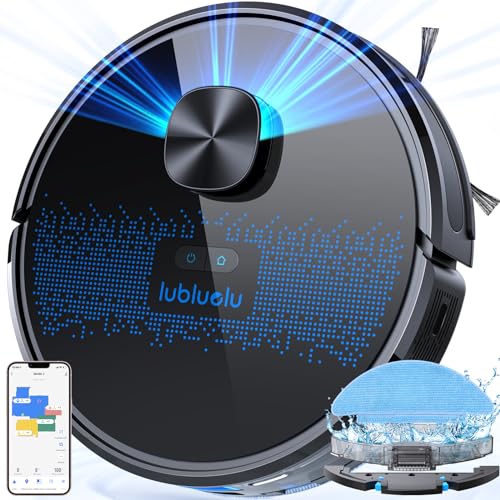 The most recent robotic vacuums are able to detect many different objects, like large furniture and clutter. They can differentiate between pet hair and dirt which is especially helpful when your pets shed. lidar navigation robot vacuum can help reduce the amount of dust you'll need to remove after cleaning and reduces the amount of waste and also saving time. The technology is not as effective at detecting small obstacles, such as cords and cables. These small items could be taken into the vacuum and cause it to damage. This is why it's important to be vigilant about ensuring that your appliances aren't plugged into power outlets near your robot vacuum. A team of researchers from the National University of Singapore and the University of Maryland has published research on this issue. The paper was titled “Spying with your Robot Vacuum Cleaner: Eavesdropping using Lidar Sensors.” The lead researcher was Sriram Sami, with contributions from Yimin Dai, Sean Rui Xiang Tan and Nirupam Roy. Obstacle Avoidance Many robot vacuums come with obstacle sensors to help them avoid hitting furniture or other objects. These sensors detect objects by using infrared light reflections from them. They then guide the robot to stay away from the object. They are an essential element of all robot vacuums, but some models also use other technologies to help understand their environment. Certain models use 3D Time of Flight to send out light pulsations and to measure the time they take to return. This allows the vacuum to understand the dimensions, height and depth of obstacles. Another popular way robotic vacuums navigate is SLAM. This method makes use of cameras and sensors in order to create a map of a room. The vacuum can utilize this data to determine its location and determine the route it'll follow to clean the room. Certain robovacs that include SLAM are able to complete a home in one pass instead of several and saves time and energy. Some robovacs have cliff sensors, which are designed to prevent the robot from falling off ledges, stairs or other ledges. They detect infrared light reflections off the surfaces of stairs and other surfaces, which is then sent back to the vacuum. The sensor sends an alert to the vacuum to make it change its route to avoid the ledge. This stops the vacuum from falling down the stairs or becoming stuck. A more sophisticated method to avoid obstacles is using multi-zone time of flight (ToF) to scan the surroundings and create a map of the space. This technology is similar to LiDAR that self-driving vehicles make use of to detect their surroundings. Certain robovacs that use this technology can scan and identify objects in real-time which is beneficial for large homes or obstacles placed in unusual places. Some robovacs equipped with 3D ToF come with cameras that can detect obstacles visually. This is useful in the event that the sensors are blocked by furniture or other obstructions. Certain robovacs come with binocular vision which lets them see the room around them in 3D. This makes it easier to navigate and clean up the entire area in one pass. Real-Time Mapping Unlike other sensors, which depend on physical contact with obstacles to detect them, lidar technology is able to detect objects even if they are not emitting any light. This is accomplished by measuring the time taken for a laser to hit an object before returning to the sensor. The data is then analyzed to create an accurate 3D map of the surrounding. This technology is utilized in a wide range of industries, like aerospace and self-driving cars. This technology also allows robotic vacuums to navigate and avoid obstacles more efficiently and reduce the need to constantly monitor them. A robot equipped with advanced mapping technology, like the ECOVACS Deebot, can navigate your home easily due to its lidar. With its TrueMapping 2.0 and AIVI 3D technology, this device can scan the surrounding and avoid obstacles in real-time for more efficient cleaning. It can also design efficient paths to clean every part of the room without repeating the same areas. Additionally, it can recognize the location of the charging station to conserve battery power and energy. Other robots perform this task with different technologies, including gyroscopes or SLAM (Simultaneous Location and Mapping). However they aren't as reliable as lidar and have several disadvantages. For instance, gyroscopes could be prone to error caused by uneven flooring or complex home layouts. Additionally they require a continuous light source to function and can be expensive when you have to charge the battery frequently. LiDAR can detect and avoid obstacles and obstacles, which is an exciting development when it comes home automation. The technology is now available on more affordable robotic vacuums. LiDAR enables a cleaner to avoid snags on the legs of chairs, cross low thresholds, and effortlessly navigate around delicate objects such as crystal vase. Moreover, it can automatically scan the entire space of your home and create a digital map. The vacuum then adapts to the layout of your home and then remember it. This will prevent the vacuum from having to clean the same area over and over again, and will decrease the battery's consumption. It can also recognize the location of its charger and return there when done. Safety Lidar sensors (light detection and range) are utilized in a variety of robotic devices, ranging from autonomous vehicles to robot vacuums. These systems emit laser beams, detect variations in reflected light from objects of various shapes and densities, then transform those signals into information that the device is able to interpret. Hackers might be using them to track your home. They're still vital for navigation and obstacle avoidance. Researchers led by Assistant Professor. Nirupam Roy from the National University of Singapore published an article titled “Spying With Your Robot Vacuum Cleaner – Eavesdropping Via Lidar Sensors” in which they showed that they could manipulate the Lidar system of a vacuum robot that is typically used to make maps and navigation, to act as a microphone and record sound without interfering with the robot's navigation. The trick is to take advantage of the fact that sound waves cause objects to vibrate which results in slight changes in the reflected signals from the robot's laser sensor. This can be detected, analyzed and transformed into audio files by hackers using the same method that is employed in laser microphones that have been used in espionage since the 1940s. While a laser can detect small obstacles, it's not able to differentiate between crystals and a pile of dust or a solid brick wall and an entrance. This is why a smart vacuum that makes use of lidar together with cameras to map the environment more precisely. A good example is the ECOVACS Dreame F9, which includes 14 infrared sensors including 8 of those which are used for object detection and collision detection. That allows the robot to easily overcome low thresholds, be careful when moving around a glass vase, and not miss a single speck of dust on your sofa. Apart from making your cleaning experience more convenient Vacuum lidar can also help protect furniture and other household items from damage. Look for a robot that comes with collision detection and prevention features that stop it from colliding with or scraping against furniture like a bumper sensor or soft cushioned edges. It's also best to get one that is furniture friendly, which means that it can safely cross low thresholds, avoid stairs, and maneuver around large pieces of furniture without damaging the furniture.